Industrial safety is often assessed through compliance with standards and calculations.
However, in real operating conditions, its effectiveness is determined much more simply — whether the equipment structure remains intact or not.
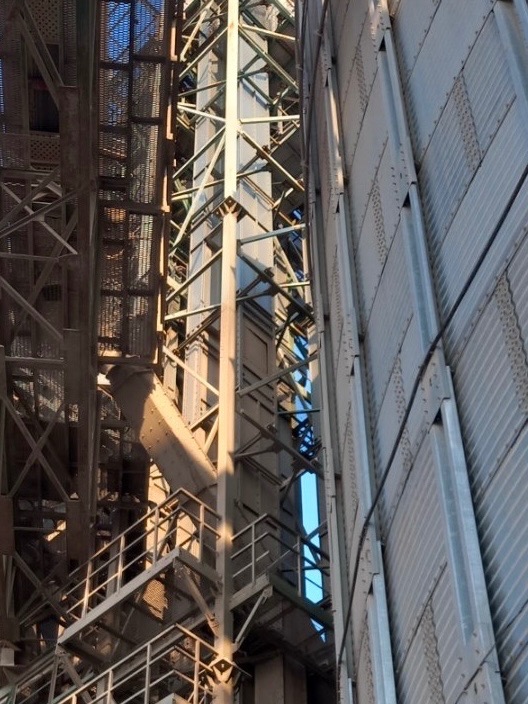
Following an incident at a grain terminal, the facility was subjected to a significant external impact. The main load was transferred to the bucket elevator, particularly to its casing.
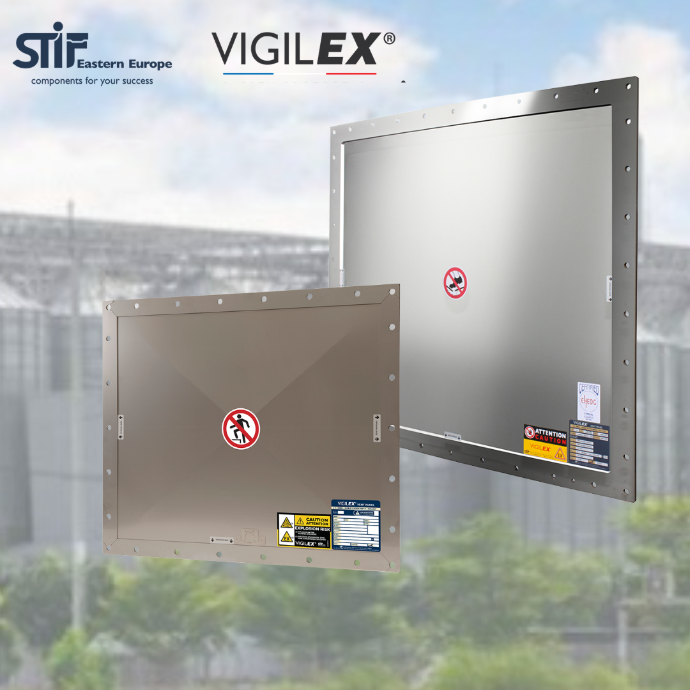
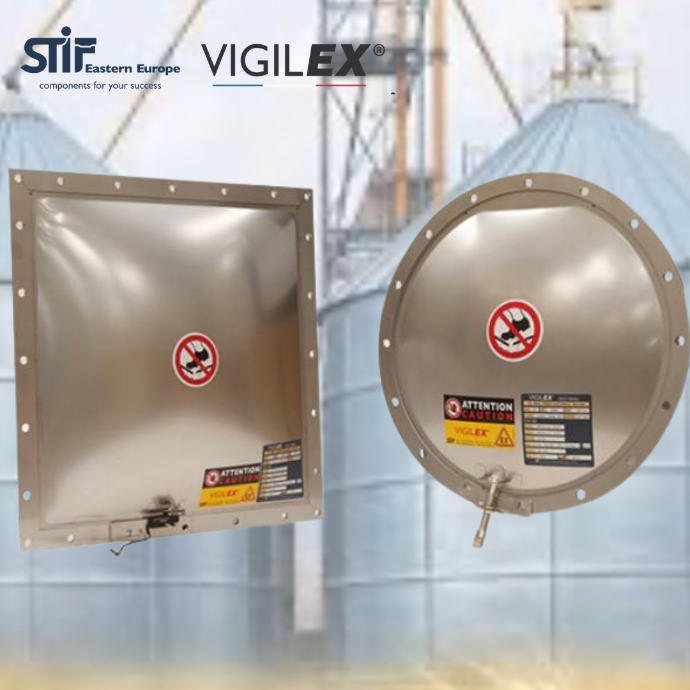
The elevator was equipped with Vigilex explosion vent panels.
According to the plant’s chief engineer, at the moment of impact there was a high risk of structural failure due to a rapid increase in internal pressure:
“The impact was severe. We considered a scenario where the elevator casing could lose its structural integrity.
However, the panels operated as designed — the excess pressure was released, which allowed the structure to be preserved.”
The protection system functioned as intended, limiting the effect of overpressure on the equipment.
Process Background: Why Destructive Loads Occur
In bucket elevators and other bulk handling equipment, a dust-air mixture is constantly present, which under certain conditions can become explosive.
In case of a sudden energy input or the presence of an ignition source, the following occurs:
- Rapid combustion of dust particles
- Intense gas generation
- A sharp rise in pressure within the enclosed volume
The critical factor is overpressure, which exceeds the structural strength of the casing and leads to deformation or failure.
Role of Explosion Vent Panels
Explosion vent panels are a passive protection solution designed to relieve pressure in a controlled manner.
Operating principle:
- opening at a predefined activation pressure
- instantaneous release of excess energy
- controlled discharge of gases
This limits the maximum pressure inside the system and prevents structural damage.
Importantly, explosion vent panels do not prevent the event itself — they control its consequences.
Application in Bucket Elevators
Bucket elevators are considered critical equipment in terms of explosion risk due to the combination of:
- enclosed volume
- continuous presence of dust
- mechanical components that may generate ignition sources
- intensive material flow
Without a pressure relief system, energy is contained within the casing, leading to structural damage.
Practical Outcome
In this case, the installed Vigilex panels ensured:
- limitation of peak pressure within
- the elevator casing
- absence of critical deformation
- preservation of structural integrity
This helped avoid major repair work and operational downtime.
Engineering Conclusion
This case demonstrates that the effectiveness of explosion protection systems is not only defined by compliance with standards, but by their ability to perform under real dynamic loads.
Explosion vent panels should be considered
an integral part of bucket elevator design, not an optional feature.
Solution Selection for Your Equipment
Each bucket elevator has unique parameters (volume, dust characteristics, operating conditions), which makes proper engineering calculation essential for effective explosion protection.
Get explosion vent panel sizing for your equipment and receive a solution tailored to your operating conditions.